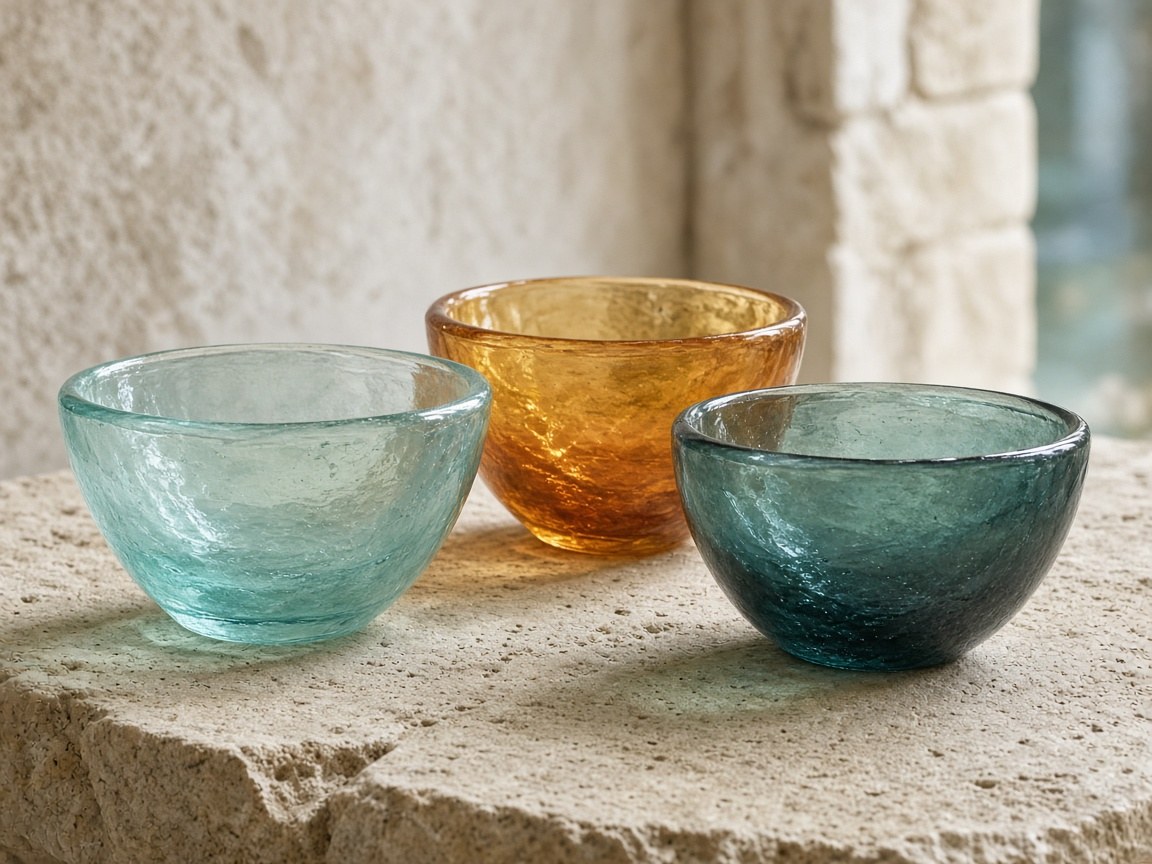
Hot shop
Bowls and cylinders
Gathered from the pot, opened on the bench, and spun until the lip remembers the last turn. Dinner-scale bowls and tall cylinders for tables that already have stone and timber in the room.
Old Acre port · since 2011
Acre Kiln Glass is a working hot shop behind Crusader-era stone on Weizmann Street. We gather, blow, kiln-form, and cold-work bowls, wall panels, and vessels for rooms that can take the weight of real glass.
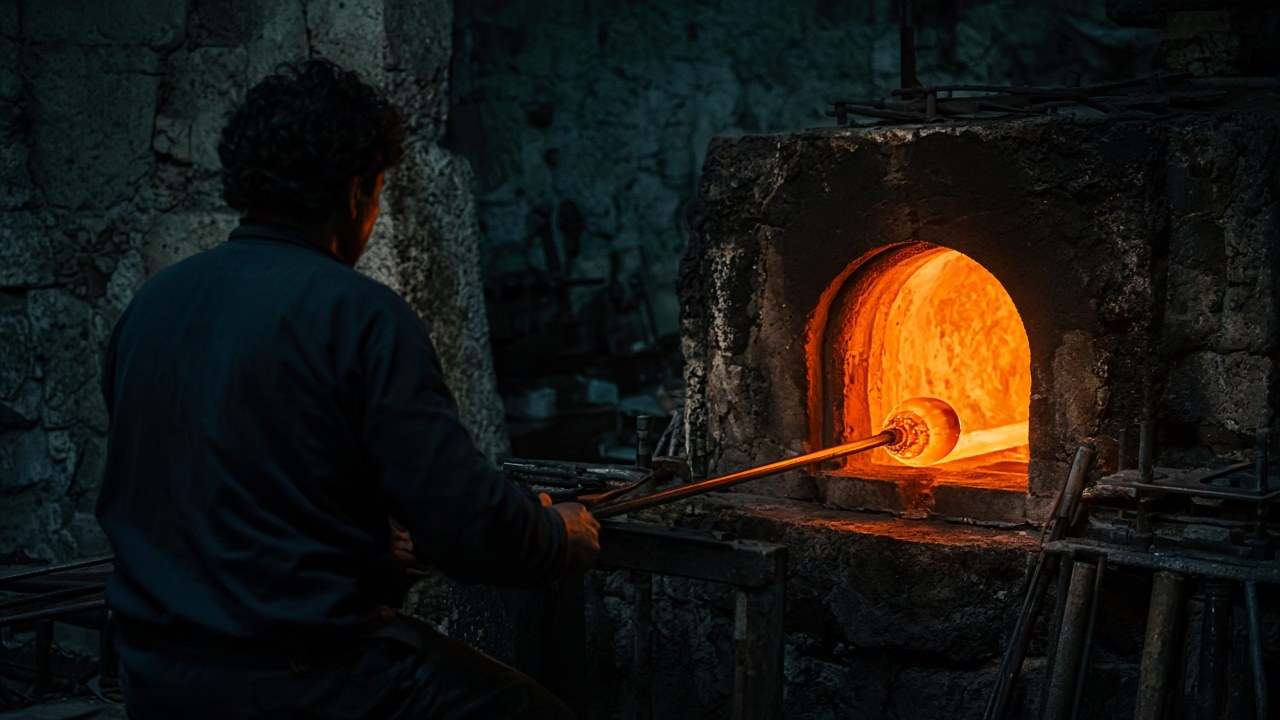
What leaves the shop
The port sells bottles with sand glued to the base. Churches restore leaded lights. We do neither as a business. This is a kiln and a glory hole: thick glass, slow anneals, and colour that comes from metal oxides and Mediterranean light.
Gathered from the pot, opened on the bench, and spun until the lip remembers the last turn. Dinner-scale bowls and tall cylinders for tables that already have stone and timber in the room.
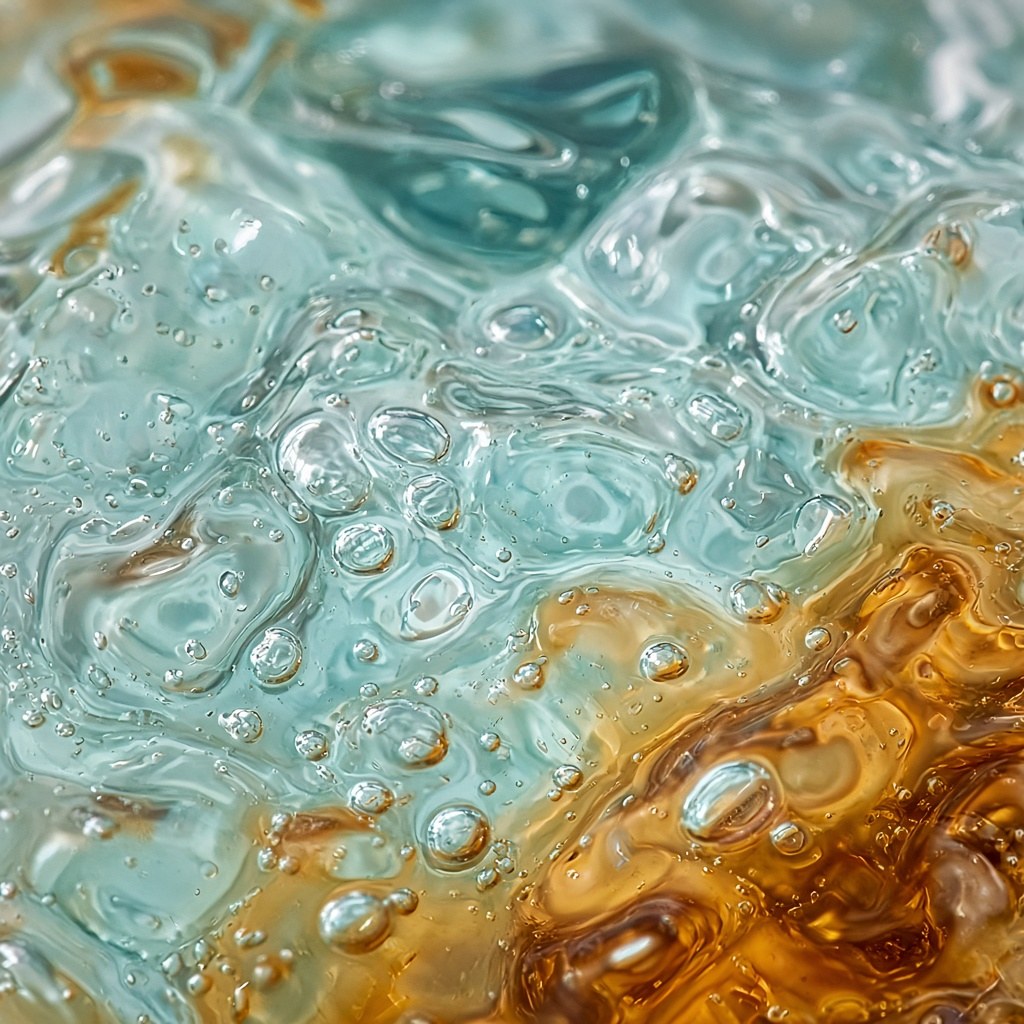
Flat and gently slumped panels fused in the kiln, then ground at the cold shop. They hang like fragments of harbour wall — grey-green, copper, and a rind of orange where the heat sat longest.
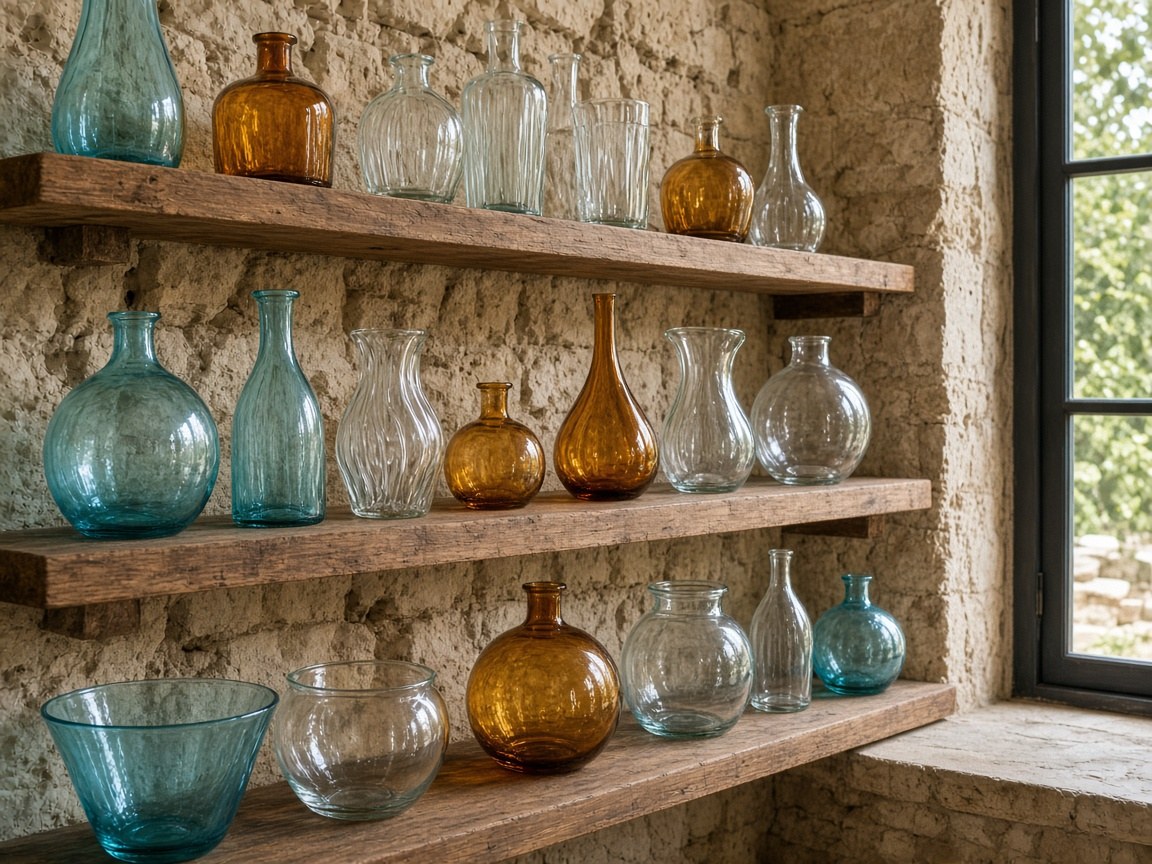
Broken harbour glass — bottles, old fishing floats, studio scrap — washed, sorted by colour, and fused into new objects. The Mediterranean is the colour teacher; the kiln is the editor.
Three moves
Every piece that leaves 9 Weizmann Street has been through this sequence. Skipping the last step is how glass becomes a pile of shards on the packing table.
A steel pipe or punty takes a skin of 1100°C glass from the pot. One gather for a small bowl; two or three for a cylinder with a thick foot. The shop smells of beeswax and wet newspaper.
Blow, block, and marver. Or, for kiln work, cut sheet and cullet, stack the charge, and program the ramp. Shape is decided while the glass is still a liquid that pretends to be a solid.
Into the annealer at about 480°C, then a programmed drop that can last ninety hours on a thick slab. Stress that is not released in the kiln will travel with the piece into the crate.
Shop numbers
These are not marketing badges. They are the temperatures and the payroll of a port-side kiln.
Kiln board
Chalked on steel beside the glory hole. Visitors who stay past a demonstration can read the same numbers we work to.
1100°C
Reheat between gathers. Too cool and the glass wrinkles; too hot and the form slumps off the pipe.
480°C
Soak temperature before the long drop. Thick vessels stay in longer than thin lips.
Cold
Diamond pads, cork belts, cerium. Edges that will sit on a table are finished here, not in the fire.
Visit or commission
Come during shop hours if you want to see work cooling, not a gift-shop counter. For a wall panel, a table set, or a single cylinder, write first — we schedule kiln loads, we do not keep a warehouse of identical stock.